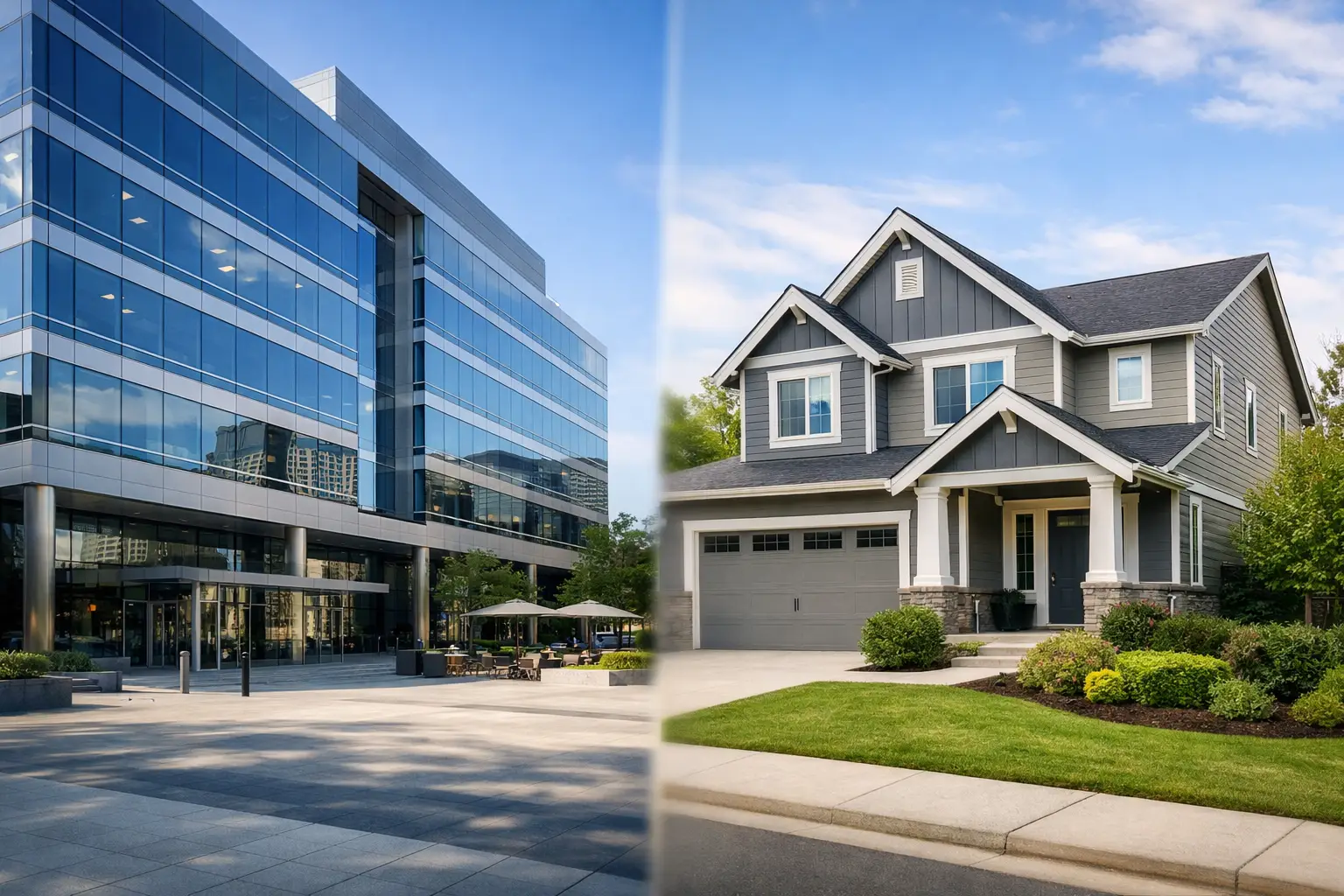
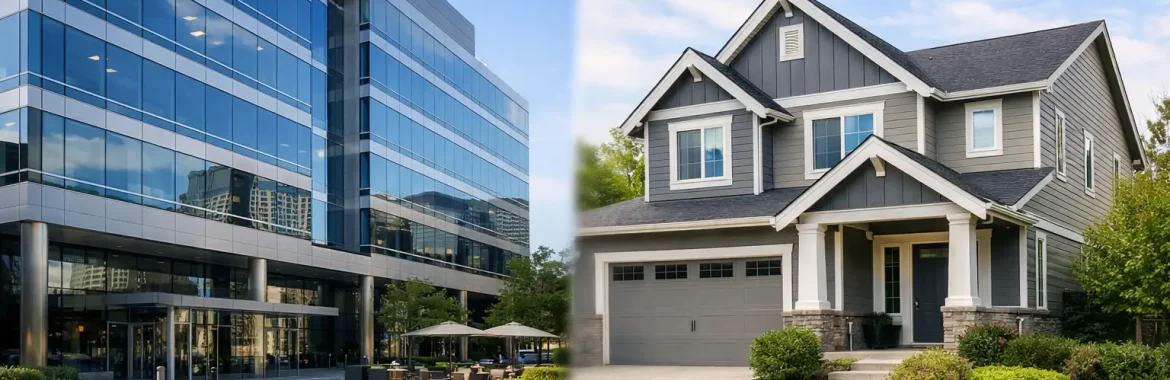
A vacant storefront and a vacant single-family home both cost an owner money, but the decisions that prevent those losses are very different. Commercial leases versus residential leases involve separate expectations for lease terms, maintenance, legal obligations, tenant relationships, and financial risk. Owners who treat them the same can create avoidable expense, disputes, and extended vacancies.
For Greater Houston property owners, the right approach starts with understanding what is being leased, how the tenant will use it, and which responsibilities belong in the agreement. Residential leasing is generally more standardized and closely regulated. Commercial leasing offers more flexibility, but that flexibility demands careful negotiation and stronger operational oversight.
The Core Difference Is the Tenant’s Use
A residential lease gives someone the right to occupy a property as a home. The tenant’s need is personal housing, and the owner must provide a habitable space that meets applicable safety and property standards. Lease terms often focus on rent, deposits, occupancy, repairs, pets, utilities, and rules for the home or community.
A commercial lease gives a business the right to use space for an approved business purpose. That could mean a retail shop, office, warehouse, restaurant, medical practice, or professional service. The permitted use matters because it affects parking needs, zoning, insurance, signage, build-out requirements, operating hours, and potential wear on the property.
This distinction changes the management workload. A residential tenant may call about an HVAC failure or plumbing leak. A commercial tenant may need approval for a sign, ask who handles roof repairs, question common-area charges, or request permission to alter the space for its operations. Both require responsive management, but commercial issues often carry larger cost and contract implications.
Lease Length and Vacancy Risk
Residential leases commonly run for 12 months, though shorter and longer terms are possible. Turnover is expected, and an owner can typically remarket a home or apartment using comparable rents and broad tenant demand. A strong leasing process, accurate pricing, and prompt maintenance help shorten the gap between tenants.
Commercial leases are often longer, commonly three, five, or more years. A longer term can produce predictable income and reduce turnover costs, but it can also make a poor tenant decision more expensive. If a business cannot perform, the owner may face months of lost rent while trying to re-lease a specialized space.
Commercial vacancy can also take longer to resolve. A former salon, restaurant, or industrial user may leave behind a space that does not immediately fit the next tenant’s needs. The owner may need to address build-out, code compliance, utility capacity, layout changes, or repairs before the space can compete in the market.
For this reason, commercial screening should go beyond a basic credit check. Owners should evaluate the business’s financial strength, time in operation, payment history, guarantors, intended use, and ability to meet the full occupancy cost. For newer businesses, a personal guarantee or larger security deposit may be appropriate, depending on the deal and applicable law.
Rent Structure Is More Complex in Commercial Leasing
Residential rent is usually simple: the tenant pays a monthly amount, and the lease identifies which utilities or services are included. The owner typically remains responsible for major building systems, property taxes, and insurance, although details vary by property type and agreement.
Commercial rent can be structured in several ways. A gross lease may have the landlord cover many operating costs. A modified gross lease may divide expenses between the parties. In a triple net, or NNN, lease, the tenant may pay base rent plus a share of property taxes, insurance, and common-area maintenance expenses.
That structure can improve an owner’s ability to protect net operating income, but it must be written and administered clearly. Tenants need to understand what they are paying, how common-area maintenance charges are calculated, whether expenses can increase, and when reconciliations occur. Owners need organized records and consistent billing so disputed charges do not damage the relationship or delay collections.
A lease with a higher advertised base rent is not automatically better. Owners should compare the expected net income after taxes, insurance, maintenance, utilities, management time, vacancy allowance, tenant improvements, and leasing costs. The best lease structure depends on the building, local demand, and the tenant’s business model.
Maintenance Duties Must Be Defined Up Front
In residential rentals, habitability obligations are central. Owners must respond to legitimate repair needs, maintain essential systems, and keep the property in rentable condition. Even when a tenant is responsible for routine tasks such as changing filters or lawn care, the owner cannot ignore serious conditions that affect health, safety, or basic use of the home.
Commercial leases can assign more maintenance responsibility to the tenant, especially in single-tenant properties. A tenant may be responsible for interior repairs, HVAC maintenance, landscaping, utilities, or even certain structural obligations under a carefully negotiated agreement. Multi-tenant buildings typically require more landlord coordination for common areas, exterior systems, roofs, parking lots, and shared services.
The practical lesson is simple: never rely on assumptions. The lease should identify responsibility for HVAC service, plumbing, electrical systems, roof repairs, glass, pest control, trash, landscaping, parking areas, and after-hours emergencies. It should also explain who selects vendors, who approves major work, and how costs are documented.
Clear maintenance language protects both sides. It helps tenants know where to submit a request and helps owners avoid paying for work that the lease assigned elsewhere. It also supports better budgeting for capital repairs that cannot be postponed without risking the asset’s condition or tenant retention.
Legal Protections Are Not the Same
Residential leasing is subject to significant consumer and housing protections. Fair housing compliance, security deposit rules, notice requirements, habitability standards, and eviction procedures require disciplined processes. Owners should use compliant forms, document communication, and handle enforcement consistently.
Commercial tenants are generally viewed as more sophisticated parties with greater freedom to negotiate lease terms. That does not mean commercial leases are free of legal risk. Owners still need to address fair dealing, property condition, accessibility considerations, insurance requirements, zoning, permits, environmental concerns, and enforceable remedies if a tenant defaults.
In Texas, local conditions and the specific property can affect the issues that matter most. A retail center, office building, warehouse, and mixed-use property do not carry the same exposure. Before signing or renewing a commercial agreement, owners should have qualified legal and insurance professionals review provisions that affect liability, guarantees, defaults, repairs, and the tenant’s permitted use.
Tenant Improvements Can Drive the Real Cost of a Deal
Residential turnover usually involves cleaning, paint, minor repairs, and make-ready work. Commercial turnover may require a tenant improvement allowance, new walls, flooring, plumbing changes, electrical upgrades, or specialized equipment. Those expenses can be worthwhile when they secure a qualified tenant on a strong long-term lease, but they should be evaluated against the expected return.
Owners should calculate the full cost of acquiring the tenant, not just the monthly rent. Include broker fees, construction costs, free-rent periods, permits, vacancy carrying costs, and the likelihood that improvements will be useful to a future occupant. A highly customized build-out may help close a deal while making the next vacancy harder to fill.
Management Needs Change With the Asset
Residential management succeeds through consistent execution: competitive pricing, effective marketing, thorough screening, timely maintenance, rent collection, inspections, and clear tenant communication. These systems reduce vacancy and protect the condition of the property.
Commercial management requires those same fundamentals plus stronger lease administration. Owners need reliable tracking for renewal options, rent escalations, insurance certificates, operating expense reconciliations, maintenance obligations, vendor contracts, and tenant requests. Missing an escalation date or failing to collect a required certificate can have a direct effect on property income and risk.
For owners with mixed portfolios, the key is not choosing one lease type over the other. It is building the right process for each. Prime Realty Property Management helps owners apply practical oversight across residential and commercial assets so lease obligations, tenant communication, maintenance activity, and income performance do not fall through the cracks.
A well-managed lease is more than a signed document. It is an operating plan for the property, and the more clearly it reflects the asset, the tenant, and the owner’s financial goals, the easier it is to protect long-term value.