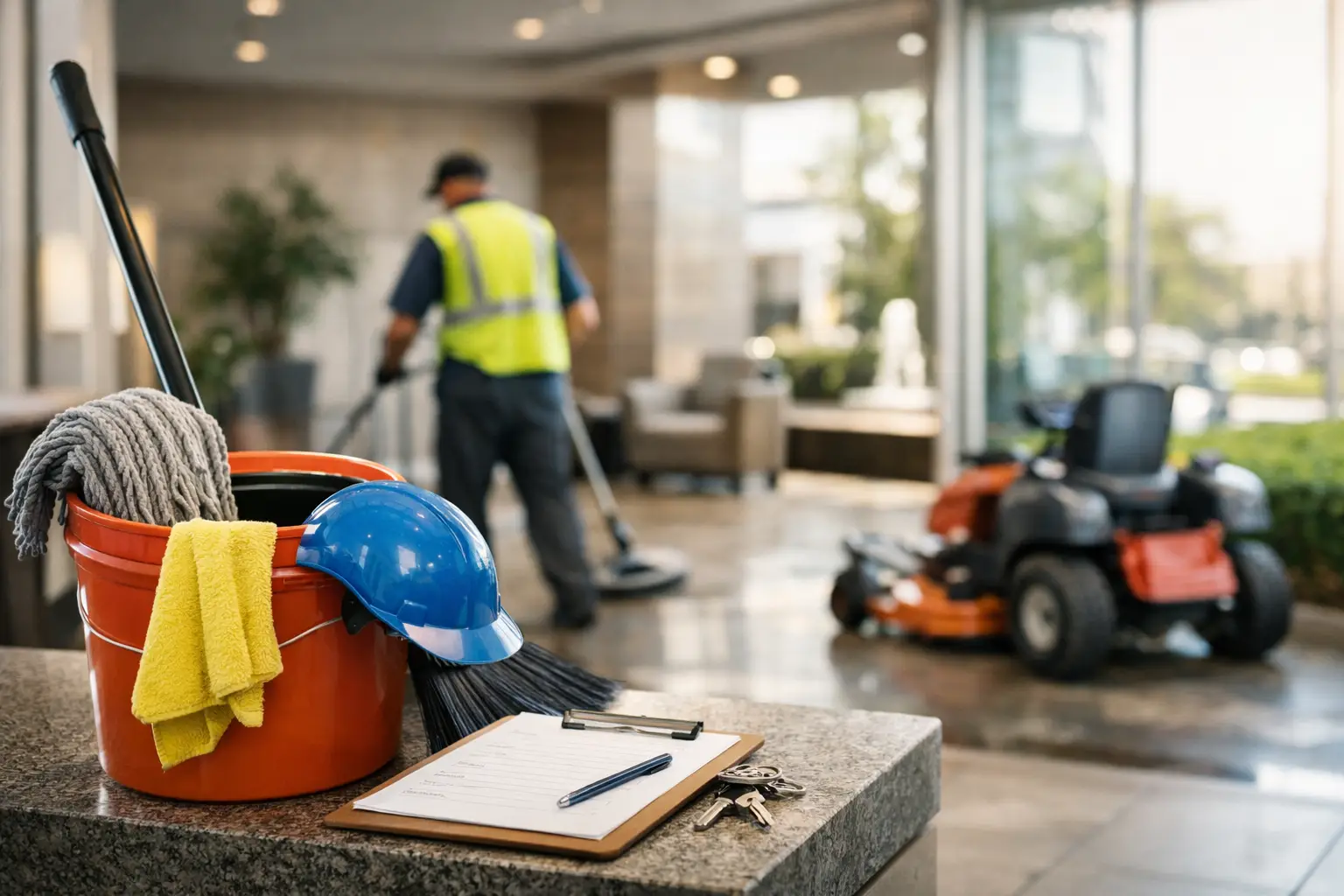
A stained entryway, overflowing dumpster, or dark parking lot can change a tenant’s opinion of a commercial property before they ever reach their suite. In Greater Houston, heat, humidity, heavy rain, and high traffic make exterior and shared-space upkeep a constant operating responsibility. This commercial common area maintenance guide helps owners build a practical system that protects the property, supports tenants, and avoids expensive deferred repairs.
Common area maintenance is not just a janitorial expense. It affects lease renewals, tenant complaints, liability exposure, utility costs, and the long-term value of the asset. The goal is consistent, documented care that keeps shared areas safe, clean, functional, and aligned with the standard tenants expect from the property.
What Counts as a Commercial Common Area?
Common areas are spaces and systems used by multiple tenants, their employees, customers, vendors, or visitors. The exact responsibility depends on the lease, particularly in triple-net, gross, and modified gross arrangements. Owners should never assume a cost is recoverable from tenants without reviewing the lease language and applicable CAM provisions.
For a retail center, common areas often include parking lots, sidewalks, landscaped medians, pylon signs, drive lanes, dumpster enclosures, lighting, and shared restrooms. In an office building, the list may also include lobbies, elevators, hallways, stairwells, common restrooms, building entrances, and mechanical rooms. Industrial properties may require attention to truck courts, gates, loading access, drainage areas, and shared fire-safety equipment.
The most effective approach starts with a written site map and responsibility matrix. Identify each shared area, the service standard, the inspection frequency, the vendor or staff member responsible, and whether the expense is owner-paid or included in CAM reconciliations.
Build a Commercial Common Area Maintenance Plan
A maintenance plan should turn recurring work into a schedule, not a series of reactions to complaints. Start with the condition of the property today. Walk the site during business hours and after dark, take photos, note trip hazards, inspect drainage, and speak with tenants about recurring issues. A daytime inspection will not reveal poor lighting, unauthorized parking, or security concerns that become obvious at night.
Then divide the work by frequency. Daily and weekly tasks generally cover cleaning, trash, restroom supplies, landscaping touch-ups, and visible safety concerns. Monthly tasks may include lighting checks, pest-control reviews, irrigation inspections, pressure washing at high-traffic points, and reviewing work orders. Quarterly and annual work should focus on preventive maintenance for pavement, roofing, HVAC systems serving common areas, fire and life-safety equipment, trees, drainage, and exterior surfaces.
A simple calendar is useful, but accountability matters more. Every task should have a due date, responsible party, completion record, and follow-up process when the work does not meet the expected standard. Photos before and after service are particularly useful for landscaping, pressure washing, storm cleanup, and vendor quality control.
Prioritize Safety Before Appearance
Curb appeal influences leasing, but safety issues require faster action. Loose handrails, cracked sidewalks, standing water, damaged wheel stops, burned-out lights, exposed wiring, blocked exits, and failing gates should be treated as priority items. Delays can create injuries, disrupt tenant operations, and increase the owner’s risk.
After a major Houston rain event, inspect the site promptly. Look for pooling water, clogged drains, erosion, roof leaks, damaged signage, fallen limbs, and pavement deterioration. Drainage problems that seem minor in dry weather can create access issues and accelerate asphalt failure over time.
Document reported hazards, the response time, repair decisions, and vendor invoices. Clear records help manage operations and provide a reliable history if questions arise later.
Focus on the Areas Tenants Notice Most
Not every maintenance item carries the same business impact. Tenants and visitors form opinions quickly, usually from the property entrance, parking experience, landscaping, building exterior, and shared restrooms. These areas should receive consistent attention even when the maintenance budget is tight.
Parking lots deserve particular focus. Faded striping, potholes, poor drainage, damaged curbs, and inadequate lighting make a property look neglected and can affect customer access. Sweep regularly, remove litter, address oil stains where practical, and schedule sealcoating and restriping before the pavement condition declines substantially. The right timing depends on traffic volume, pavement age, weather exposure, and the property’s use.
Landscaping should fit the site’s needs rather than follow a generic schedule. A professional office property may need closely managed beds, trimmed shrubs, and a polished entrance. A warehouse or industrial site may prioritize mowing, weed control, tree clearance, and unobstructed truck access. In both cases, irrigation leaks, dead plant material, and overgrown sightlines should be corrected quickly.
Shared restrooms, lobbies, and corridors require a dependable cleaning standard. A missed cleaning service is visible immediately and often produces tenant complaints that exceed the cost of preventing the issue. Set expectations for supplies, odor control, floor care, touchpoint cleaning, and response times for spills or damage.
Control Costs Without Deferring the Work
Owners should control maintenance spending, but cutting preventive work is rarely the best savings strategy. Skipping a drain cleaning may lead to water intrusion. Ignoring small pavement cracks may lead to larger repairs. Waiting to repair an irrigation leak can increase utility bills while damaging landscaping and nearby surfaces.
The better approach is to plan the annual maintenance budget with separate categories for recurring services, preventive maintenance, capital reserves, and emergency repairs. This makes it easier to see whether a cost is a normal operating expense or a larger project that needs a different approval process.
Request clear vendor scopes of work. A low bid is not necessarily a lower cost if it excludes cleanup, disposal, materials, after-hours access, insurance requirements, or return visits. Compare service levels, response times, documentation, and reliability along with the price.
For multi-tenant properties, review lease terms before billing CAM charges. Some leases cap controllable expenses, exclude management fees or capital items, or require detailed annual reconciliations. Accurate coding and organized invoices protect owner revenue while giving tenants a clear explanation of what they are paying for.
Use Technology to Track Work and Communication
A centralized maintenance system prevents requests from disappearing into texts, emails, or handwritten notes. Tenants should have a clear way to report common-area concerns, while managers need visibility into priority, assignment, status, cost, and completion.
Track recurring issues, not just individual work orders. If the same drain clogs after every storm, the solution may be a drainage assessment rather than another cleaning. If tenants repeatedly report exterior lighting outages, review the fixture type, electrical system, inspection schedule, and vendor response process.
Technology also improves communication. When tenants know that a paving repair is scheduled, landscaping will be temporarily restricted, or storm debris is being removed, they are less likely to view normal maintenance as neglect. Practical updates build trust and reduce unnecessary calls.
Set Vendor Standards and Inspect the Results
Even dependable vendors need clear expectations. Define service days, arrival windows, access procedures, cleanup requirements, emergency contacts, insurance requirements, and the person authorized to approve additional work. For safety-sensitive services, confirm credentials and keep current documentation on file.
Do not rely on invoices alone to verify performance. Conduct regular property walks and inspect a sample of completed work. Look at the details: Is trash removed from fence lines and landscaping beds? Are sidewalks actually clean after pressure washing? Were clippings blown away from tenant entrances? Are lights functioning after a reported repair?
A local property management team can provide another layer of oversight by coordinating vendors, handling tenant communication, tracking work orders, and monitoring costs against the property budget. For owners with multiple properties or limited time, that operational consistency can reduce stress while helping protect the property’s income potential.
Review the Plan With Tenants and Financials
Maintenance planning works best when it is reviewed regularly. Meet with key tenants or send periodic updates to identify access concerns, recurring cleanliness issues, parking conflicts, and upcoming operational needs. A tenant may notice a failing door closer or drainage problem long before it appears on an inspection list.
At the same time, review maintenance spending against budget and prior periods. Higher costs are not automatically a problem. They may reflect storm recovery, necessary repairs, better vendor performance, or a project that prevents a larger failure. The question is whether the spending has a clear purpose, proper documentation, and a measurable benefit to the asset.
A well-maintained common area gives tenants a better daily experience and gives owners more control over a property’s condition, costs, and reputation. Consistent inspections and timely action are usually less expensive than explaining why a preventable issue was allowed to grow.